
Quick answer
What to know first
Blood and certain body fluids can present an exposure risk. Avoid direct contact and use trained, properly equipped professionals when contamination may be present.
What to do next: If exposure may have occurred, seek appropriate medical guidance promptly; for property cleanup, keep people away from the affected area until it is assessed. Explore the related service.
Official guidance: OSHA bloodborne-pathogen standard · EPA disinfectant guidance
Blood-borne pathogens (BBPs) are microorganisms present in human blood that can cause disease if they enter the body. Under OSHA 29 CFR 1910.1030 — the Blood-Borne Pathogen Standard — all human blood must be treated as potentially infectious regardless of source. This is called Universal Precautions, and it forms the legal and scientific basis for why professional cleanup is required in Texas.
01What Are Blood-Borne Pathogens?
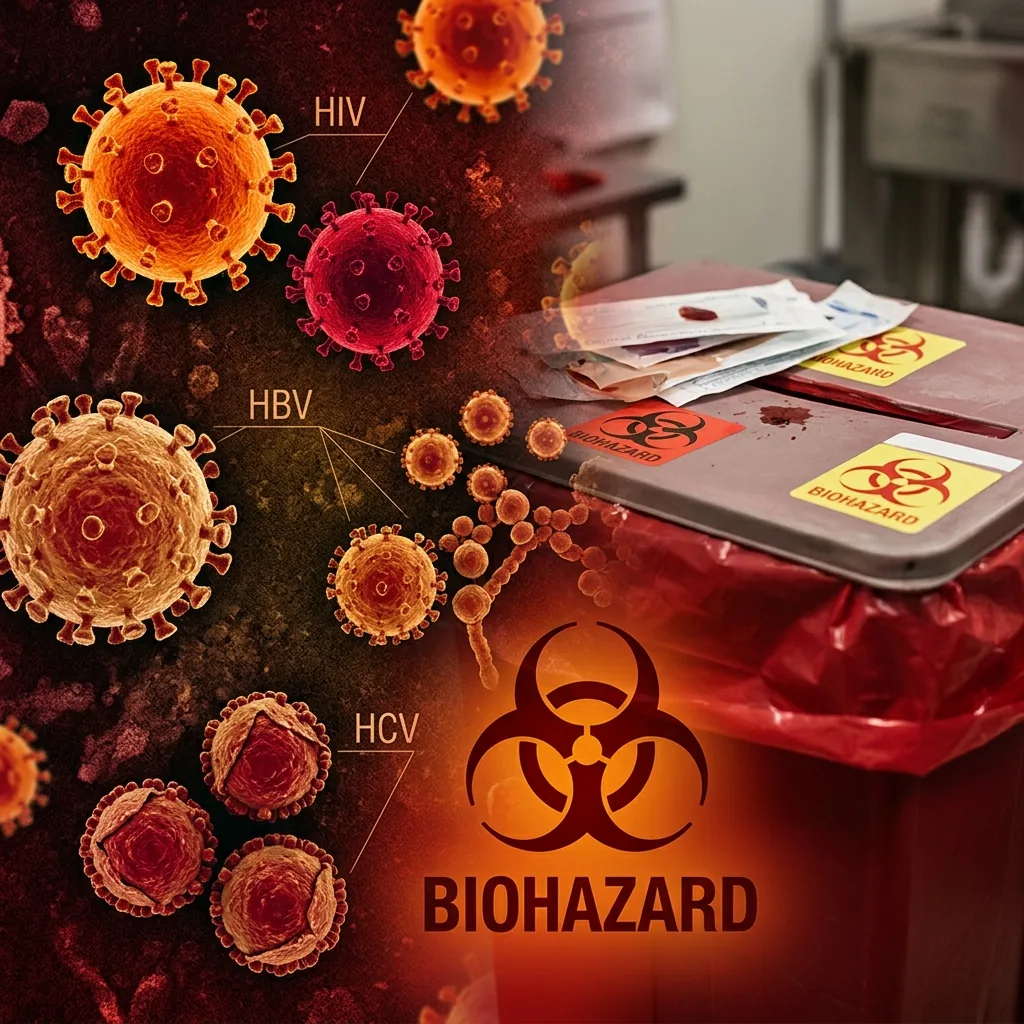
Blood-borne pathogens are infectious microorganisms in human blood that can cause serious or fatal disease in humans. The primary BBPs regulated by OSHA include HIV, Hepatitis B virus (HBV), and Hepatitis C virus (HCV). However, blood can also carry MRSA, Clostridioides difficile (C. diff), and other serious pathogens that present significant risk in cleanup situations.
What makes BBPs uniquely dangerous in cleanup situations is their ability to survive outside the human body on environmental surfaces — sometimes for days. Blood that appears dry and inactive may still contain viable, infectious pathogens. This is why OSHA's Universal Precautions mandate treating all blood as infectious regardless of its apparent condition.
02Blood-Borne Pathogen Surface Survival Times
The following survival data comes from peer-reviewed research published in the Journal of Infectious Diseases, The Lancet, and CDC/OSHA publications. These are the same data sources that inform OSHA's Universal Precautions standard.
| Pathogen | Surface Survival (Dry) | Surface Survival (Moist) | Infectivity Risk | Texas Climate Note |
|---|---|---|---|---|
| Hepatitis B (HBV) | Up to 7 days | Up to 7+ days | Extremely High (100x HIV) | Heat accelerates drying but not deactivation |
| HIV | Hours to 4 days | Up to 4 days | High (requires mucosal/blood contact) | High humidity extends survival |
| Hepatitis C (HCV) | Up to 4 days | Up to 6 weeks | High (smaller inoculum than HBV) | Survives well in porous materials |
| MRSA | Days to weeks | Days to months | High (skin/mucous membrane contact) | Thrives in Fort Worth humidity |
| C. difficile (C. diff) | Months (spores) | Months (spores) | Moderate (primarily fecal-oral) | Spores highly resistant to cleaning |
| Norovirus | Weeks | Weeks | Extremely High (18 particles = infection) | Highly resistant to standard bleach |
| Clostridioides spores | Months | Months | High (spore-forming, resistant) | Standard disinfectants ineffective |
Critical point about dried blood: Blood that has dried and appears completely inactive can still contain viable HBV for up to 7 days. Attempting to clean dried blood without proper PPE and EPA-registered disinfectants is a direct exposure risk. The dry appearance of blood does not indicate that pathogens are inactive.
03Transmission Routes and Real Risks
Understanding how BBPs transmit helps clarify why specific PPE and decontamination protocols are required. The three primary transmission routes relevant to cleanup situations are:
Percutaneous (Needle or Sharp Object)
Contact with blood through a break in the skin — from a hidden sharp object in debris (needles, broken glass, bone fragments). In hoarding and crime scene situations, hidden sharps are a primary exposure risk for untrained individuals attempting cleanup without proper sharps protocol.
Mucous Membrane Exposure
Blood or fluid contact with eyes, nose, or mouth. Aerosolized blood particles from aggressive wiping, scrubbing, or use of pressure washers can travel several feet and deposit on mucous membranes. This is why OSHA requires face shields — not just goggles — during blood cleanup operations.
Non-Intact Skin Contact
Blood contact through cuts, abrasions, eczema, or any break in the skin. Many people attempt blood cleanup without gloves, not realizing they have small cuts or skin breaks that provide direct pathogen entry. OSHA requires double-gloving (nitrile over nitrile) for blood cleanup operations.
04Why DIY Blood Cleanup Is Dangerous
The dangers of DIY blood cleanup fall into three categories: health risks, legal risks, and inadequate decontamination that creates ongoing hazards.
Household Cleaning Products Don't Work
Standard household cleaners — Lysol, Clorox wipes, Pine-Sol, even undiluted bleach — do not meet OSHA's requirement for blood-borne pathogen decontamination on porous materials. OSHA requires EPA-registered disinfectants with specific kill claims for HBV and HIV. Bleach at standard household concentrations evaporates before achieving sufficient contact time on porous surfaces.
You Cannot See What You Miss
Blood contamination is not visible to the naked eye under normal lighting. Blood splatter from a moderate-force event can travel 8–12 feet from the source. UV forensic light reveals blood deposits invisible to the naked eye — on walls, ceilings, furniture, inside ventilation grilles, under baseboards. Without forensic UV mapping, contaminated areas will be missed.
No Way to Verify Decontamination
Without ATP (adenosine triphosphate) bioluminescence testing, there is no scientific way to confirm that decontamination was successful. A DIY cleanup may appear clean visually while remaining highly contaminated at a microbial level. ATP testing provides a measurable, documented pass/fail result — required for insurance documentation and property transactions.
Porous Material Penetration Is Invisible
Blood penetrates carpet within minutes, reaching the padding layer. From padding, it reaches subfloor within 30–60 minutes. Surface decontamination of carpet (even with professional-grade chemicals) cannot reach contamination that has penetrated into subflooring. Only physical removal of saturated materials eliminates the pathogen source at this depth.
05Texas Law on Blood-Contaminated Waste Disposal
In Texas, blood-contaminated materials are classified as Category A biohazardous medical waste under the Texas Health and Safety Code (THSC) Chapter 361 and Texas Administrative Code (TAC) Title 30, Part 1, Chapter 330. Key legal requirements:
06OSHA BBP Standard 1910.1030: What It Requires
OSHA's Blood-Borne Pathogen Standard (29 CFR 1910.1030) is the primary federal regulation governing blood cleanup. While originally designed for healthcare workers, it applies to any worker who has reasonably anticipated exposure to blood or other potentially infectious materials (OPIM), including biohazard cleanup workers.
| OSHA Requirement | What It Means in Practice |
|---|---|
| Universal Precautions | Treat all blood as if it contains HBV, HIV, and other BBPs regardless of known status of the source |
| Engineering Controls | Use sharps containers, sealed biohazard bags, HEPA-filtered air equipment to minimize exposure |
| Work Practice Controls | No eating/drinking in work area, proper hand washing, no mouth pipetting, proper needle handling |
| PPE Requirements | Gloves, face shield, Tyvek body covering, shoe covers; gloves required whenever there is any possibility of exposure |
| Decontamination | All surfaces must be decontaminated with EPA-registered disinfectants with documented kill claims for HBV and HIV |
| Hepatitis B Vaccination | Employers must offer HBV vaccination to all workers with occupational exposure at no cost |
| Post-Exposure Protocol | Documented protocol for needlestick or exposure incidents; medical evaluation within hours |
| Recordkeeping | Exposure incident records must be maintained for 30 years; training records for 3 years |
07How Professionals Handle Blood-Borne Pathogen Cleanup
Scene Assessment and UV Forensic Mapping
UV forensic lights reveal all blood deposits invisible to the naked eye. Our technicians systematically map the entire affected area before any cleaning begins. This ensures no contamination is missed — including satellite spatter on walls, ceilings, and hidden areas.
Personal Protective Equipment Deployment
Full Level C PPE: double nitrile gloves, Tyvek coveralls with hood, N95 or P100 respirator, face shield, booties. PPE is donned following OSHA protocols and is disposed of as biohazardous waste after each use. No reusable components are used in contaminated areas.
Gross Contamination Removal
Physical removal of all materials contaminated beyond the point of chemical decontamination — saturated carpet, padding, subflooring sections, drywall. All materials are double-bagged in DOT-approved biohazard bags and sealed immediately.
EPA-Registered Disinfection
Application of EPA List Q registered disinfectants (specifically approved for SARS-CoV-2 and other blood-borne pathogens) to all affected surfaces with documented dwell times meeting manufacturer specifications. Hard surfaces receive two treatment passes.
ATP Bioluminescence Clearance Testing
Post-cleanup ATP testing at multiple points throughout the treated area. ATP levels below 100 RLU (relative light units) confirm successful decontamination. Results are documented photographically and included in the final clearance certificate.
Licensed Waste Disposal and Documentation
All biohazardous materials are transported by our TCEQ-licensed vehicles to licensed medical waste treatment facilities. Complete chain-of-custody manifests are provided for insurance documentation, legal protection, and property transaction records.
Professional Blood Cleanup — Fort Worth & DFW
OSHA-certified. UV forensic mapping. ATP clearance testing. Available 24/7.
Frequently Asked Questions
Blood-borne pathogen questions answered by OSHA-certified Fort Worth professionals
HIV can survive on surfaces for up to 4 days under optimal conditions (cool, moist, dark environment). In dried blood, HIV can remain viable for several hours to days. Fort Worth's summer heat (100°F+) accelerates drying but does not immediately inactivate the virus. All blood must be treated as potentially infectious regardless of its apparent condition — this is OSHA's Universal Precautions standard.
Hepatitis B virus (HBV) is exceptionally hardy — it can survive on environmental surfaces for up to 7 days at room temperature in dried blood. HBV is 50–100 times more infectious than HIV per exposure. This makes HBV the most significant pathogen risk in blood cleanup situations. Only EPA-registered disinfectants with specific HBV kill claims are effective.
Household bleach at a 1:10 dilution (1 part bleach to 9 parts water) can kill HBV and HIV on hard, non-porous surfaces if applied with sufficient dwell time (10+ minutes). However, bleach does not penetrate porous materials (carpet, wood, concrete), degrades rapidly in organic matter (blood itself), and does not meet OSHA's documentation requirement for EPA-registered disinfectants. Bleach alone is insufficient for biohazard cleanup situations.
Improperly disposing of blood-contaminated materials is a violation of Texas Health and Safety Code and Texas Administrative Code. Blood-contaminated materials are classified as biohazardous medical waste and must be transported by TCEQ-licensed haulers to licensed medical waste facilities. Disposal in regular trash or dumpsters carries fines up to $25,000 per day per violation. Additionally, if non-trained workers are directed to clean blood without proper PPE and training, employers face OSHA fines up to $15,625 per violation.